Injection Molding Trends in Automotive Industry for 2026?
The Injection Molding Automotive Industry is undergoing significant transformation as we approach 2026. With projections indicating a growth rate of 4.2% annually, companies are shifting towards more innovative materials and technologies. A report by MarketsandMarkets highlights the increasing demand for lightweight and high-performance parts. This is crucial for electric vehicles, where reducing weight can enhance efficiency.
In recent years, inclusion of AI technology in manufacturing processes has gained traction. The 2026 Canton Fair, for instance, will feature AI-enabled searches to enhance supplier discovery. Such advancements have the potential to streamline production lines and reduce operational costs. However, this integration poses challenges, including the risk of over-reliance on automation.
Moreover, sustainability in injection molding is becoming essential. As consumers demand eco-friendly products, manufacturers must adapt. This trend pushes the industry towards recycling initiatives and the use of bio-based materials. Yet, there remains a critical need for balance in quality and environmental responsibility. This industry evolution is not without its hurdles and requires reflection on best practices for future growth.
Current State of Injection Molding in the Automotive Industry
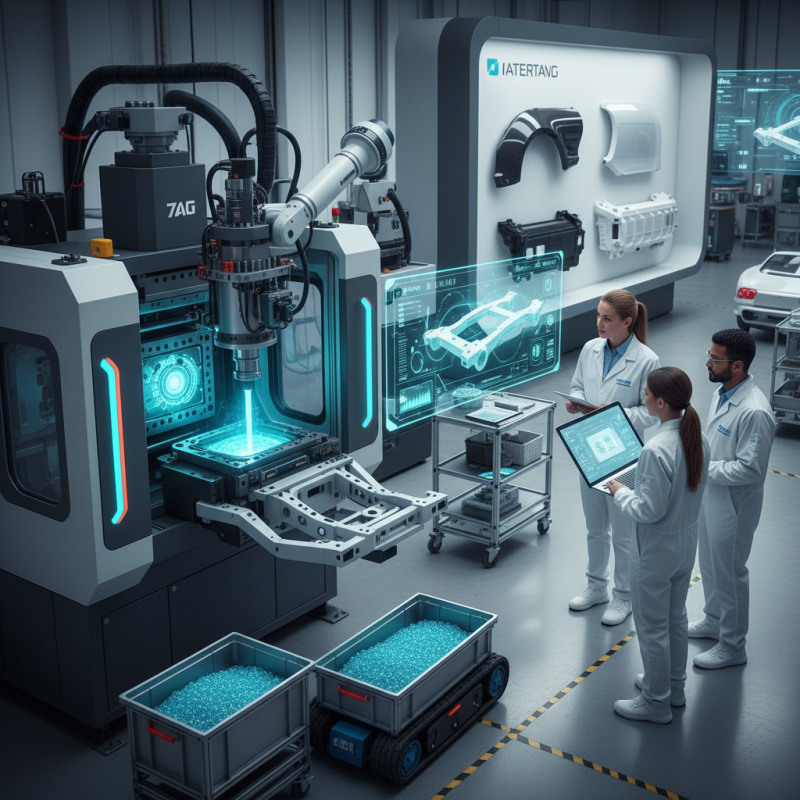
The automotive industry is embracing advanced injection molding techniques. Current trends highlight a shift towards lightweight components. Many manufacturers are prioritizing materials that reduce vehicle weight while enhancing strength. Industry reports predict that by 2026, the adoption of advanced polymers will increase by 25%. This shift will help meet regulatory demands for fuel efficiency and sustainability.
Despite this progress, challenges remain. The complexity of injection molding processes can lead to defects in production. A recent study indicated that about 15% of molded components may require reworking or replacement. This not only increases costs but also impacts delivery times. Investment in technology and employee training is essential to mitigate these issues.
Moreover, the trend towards electric vehicles poses new challenges for manufacturers. The demand for specific parts is rapidly evolving. Companies must adapt their injection molding techniques to accommodate this shift. Many are exploring innovative molds and designs. Achieving a balance between efficiency and customization is crucial. Effective communication along the supply chain can enhance coordination. However, the risk of supply chain disruptions remains a significant concern.
Key Innovations in Injection Molding Technology
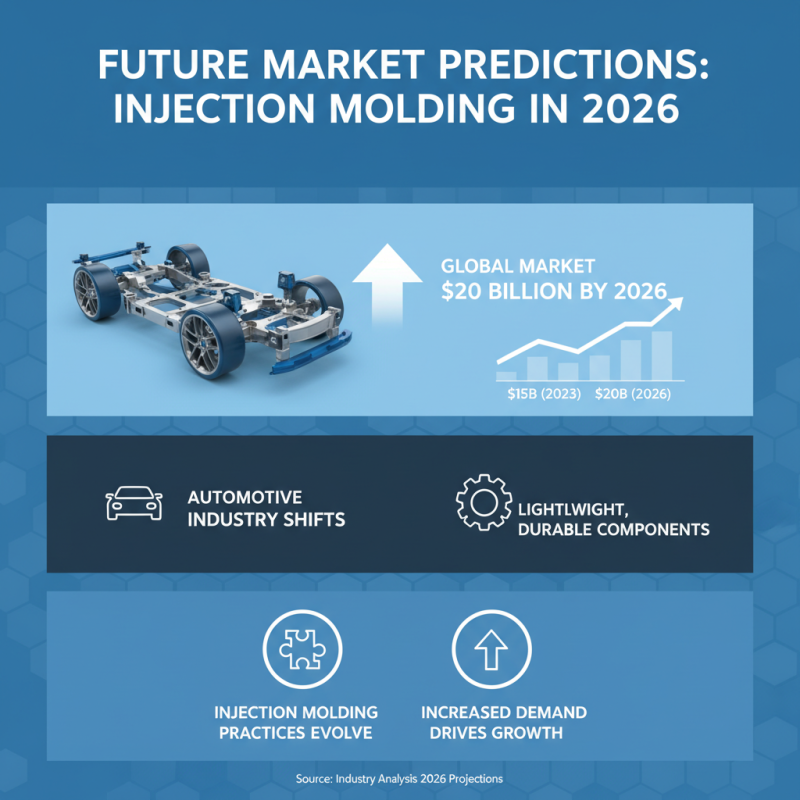
Injection molding is evolving rapidly in the automotive industry. By 2026, we can expect significant advancements in technology. Recent data indicates that the global injection molding market will reach $18.4 billion by 2026. This reflects increasing demand for high-quality auto components.
Key innovations are shaping this field. One notable trend is the rise of multi-material injection molding. This technique allows the combination of different materials in a single process. It enhances functionality and reduces assembly costs. A report suggests that multi-material molding may grow at a CAGR of 7.5% through 2026.
While these innovations promise efficiency, challenges remain. Not all manufacturers can adopt these technologies swiftly. There might be gaps in training and resources. Moreover, integration of smart technologies into injection molding processes could be slow. The transition may require more investment than anticipated. Addressing these shortcomings is vital for a smoother shift into the future of automotive manufacturing.
Sustainability Trends in Automotive Injection Molding
The automotive industry is increasingly focusing on
sustainability in injection molding. By 2026, the demand for
eco-friendly materials is expected to rise significantly. Reports show that approximately
20% of automotive plastic parts will incorporate
recycled materials. This shift is crucial for reducing the industry's carbon footprint.
Using bio-based plastics can help manufacturers meet sustainability goals. Current estimates suggest that
bio-based materials can lower emissions by up to 50%.
However, there's still hesitation in adoption due to cost and performance concerns. Traditional materials
often yield better results, which leads to a reluctance to switch.
Tip: Consider eco-design practices early in the product
development phase. Early integration of sustainable materials can streamline production.
Challenges remain in balancing performance with sustainability. The industry is moving towards using materials
that are both high-performing and environmentally friendly. Yet, some manufacturers still prioritize cost over
sustainability, which can hinder progress. Everyone must acknowledge these trade-offs when advancing towards
a greener future.
Tip: Conduct lifecycle assessments to evaluate long-term benefits. Understanding the full
environmental impact can guide better material choices.
Impact of Electric Vehicles on Injection Molding Practices
The rise of electric vehicles (EVs) is reshaping injection molding practices in the automotive sector. A recent report from the International Energy Agency noted that EV sales are projected to reach 30% of total vehicle sales by 2026. This shift demands innovative approaches in manufacturing processes. Traditional materials often used in combustion engine vehicles may not meet the requirements for lightweight, efficient designs in EVs.
Injection molding presents distinct advantages for EV components. The ability to produce complex geometries at scale makes it ideal for creating lightweight battery housings and interior parts. However, there are challenges. The transition to new materials, such as lightweight composites, raises questions about production efficiency and cost. A report from MarketsandMarkets indicates that the demand for sustainable materials in injection molding is increasing, yet adoption rates are slow.
Companies must adapt to these trends or risk falling behind. EVs require a different approach to thermal management, safety, and recyclability. While injection molding offers solutions, some existing practices may not align with evolving standards. As manufacturers explore these changes, they must consider not only technical adaptations but also the broader implications on supply chains and market dynamics. The automotive industry stands at a crossroads, with injection molding evolving to support the future of transportation.