Why Choose Rapid Injection Molding for Your Production Needs?
Rapid Injection Molding has gained significant traction in the manufacturing industry due to its efficiency and cost-effectiveness. According to a recent report by Grand View Research, the global injection molding market is expected to reach $469.96 billion by 2028, emphasizing the demand for rapid production methods. The ability to produce high-quality components quickly enables companies to stay competitive in a fast-paced market.
Expert Dr. Emily Chen, a leading figure in injection molding, states, "Rapid Injection Molding is revolutionizing how we approach production cycles." Her insights highlight the technology’s capability to reduce lead times from weeks to days, which is crucial for businesses needing flexibility. This shift not only helps in meeting urgent demands but also in testing new designs efficiently.
However, the landscape of manufacturing is not without its challenges. Rapid Injection Molding requires careful consideration of material selection and process optimization. Companies must reflect on their needs and potential pitfalls, such as quality control and machinery limitations. Despite these challenges, the benefits of Rapid Injection Molding often outweigh the drawbacks, proving it to be a game-changing approach for modern production needs.

Understanding Rapid Injection Molding and Its Process
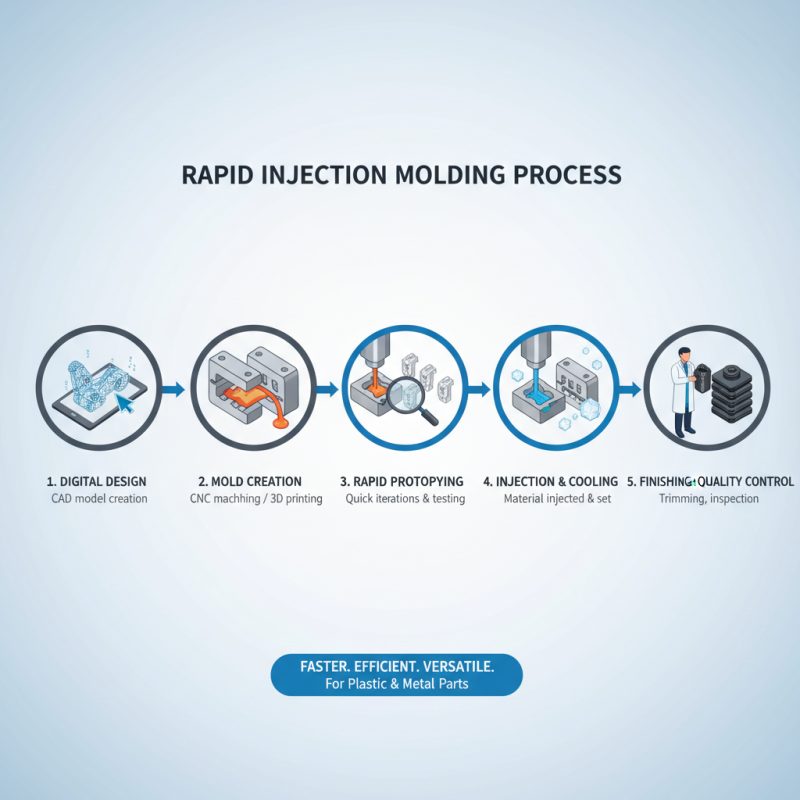
Rapid injection molding is a modern manufacturing method gaining traction in various industries. The process starts with creating a digital design of the parts needed. This design informs the creation of molds, which are crucial for shaping materials like plastic or metal. The molds undergo rapid prototyping, allowing for quick and effective adjustments. This part of the process is often complex and requires skilled technicians to oversee it.
Once the molds are ready, materials are injected under high pressure. This method ensures that the parts produced are precise and consistent. The rapid nature of this process means shorter lead times and faster production. However, it’s important to recognize the limitations, such as the initial costs of mold production. Companies must weigh these factors carefully.
Rapid injection molding also allows for iterative development. This means designs can evolve based on testing and feedback. As a result, teams can refine products and improve functionality. However, it requires a commitment to quality assurance and constant monitoring. Balancing these demands is critical for successful outcomes.
Key Advantages of Rapid Injection Molding in Manufacturing
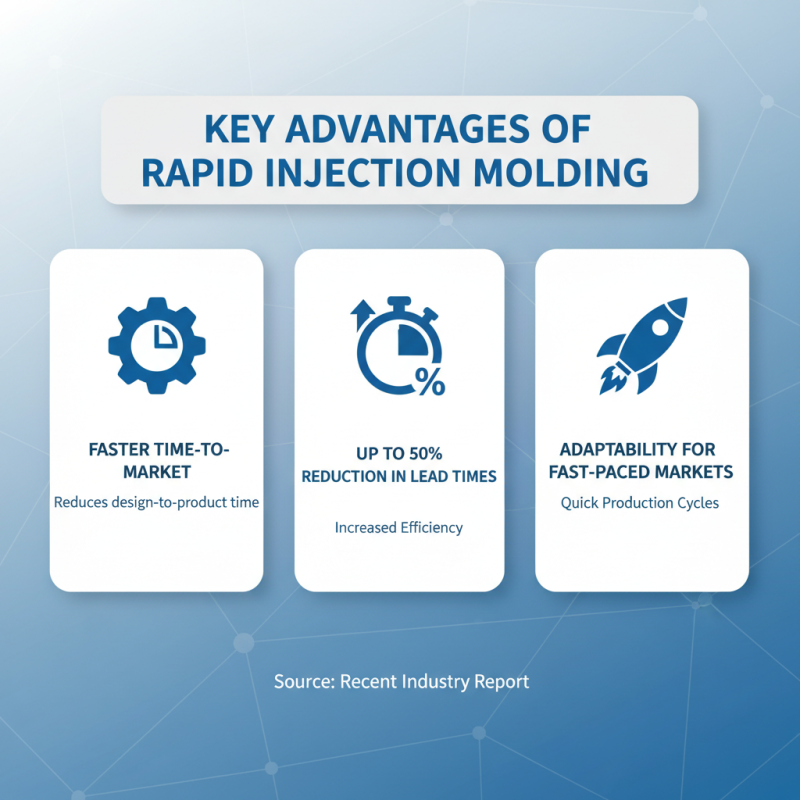
Rapid injection molding is gaining traction for various production needs. This process significantly reduces the time from design to finished product. According to a recent industry report, companies adopting rapid injection molding can reduce manufacturing lead times by up to 50%. This efficiency is crucial in today’s fast-paced market.
Another major advantage is the cost-effectiveness of rapid injection molding. Research indicates that the average cost for creating a prototype can drop by 30% using this method. Detailed studies highlight that companies can benefit from lower material waste. Despite the initial investment in designing molds, the long-term savings are compelling. Companies can focus on innovation without being bogged down by traditional delays.
However, rapid injection molding is not without its challenges. The quality of molds may vary, especially for very intricate designs. This variability can lead to unexpected costs in terms of rework. Additionally, the process may struggle to meet specific high-tolerance requirements. A balance between speed and quality is crucial. Companies must consider their unique needs when choosing this approach.
Applications of Rapid Injection Molding Across Various Industries
Rapid injection molding is transforming manufacturing across many sectors. This method is highly efficient for producing complex parts quickly. Industries like automotive, aerospace, and medical use rapid injection molding to meet tight deadlines. It supports high-volume production while maintaining precision. Design flexibility allows engineers to innovate without compromising quality.
For medical devices, precision is crucial. Rapid injection molding creates intricate designs that ensure functionality and safety. In the automotive sector, it produces lightweight components that improve fuel efficiency. Each industry benefits from shorter lead times and reduced costs.
Tips: Focus on the prototype's design early. Bring in stakeholders to gather insights. This can significantly cut down on potential revisions. Always verify material compatibility. Not all materials work for every application. Consider potential challenges with scalability. Testing initial batches can highlight any issues before full-scale production.
Applications of Rapid Injection Molding Across Various Industries
| Industry |
Application |
Benefits |
Production Speed |
| Automotive |
Interior Components |
High Precision, Lightweight |
Fast Cycle Times |
| Consumer Electronics |
Casing and Housing |
Complex Geometries, High Aesthetic Quality |
Rapid Prototyping |
| Medical |
Surgical Instruments |
Sterilizable, High Tolerances |
Quick Turnaround |
| Aerospace |
Structural Components |
Lightweight, Durable |
Efficient Production |
| Industrial Equipment |
Enclosures and Housings |
Robust Design, Cost-Effectiveness |
High Volume |
Cost-Effectiveness of Rapid Injection Molding Compared to Traditional Methods
Rapid injection molding offers a unique blend of efficiency and cost savings for manufacturers. Traditional methods can be lengthy and require extensive setup time. In contrast, rapid injection molding significantly reduces production cycles. This means that businesses can bring products to market faster. The quicker turnaround allows for more agile responses to market demands.
The cost-effectiveness of rapid injection molding lies in its ability to produce high-quality parts at lower costs. Bulk material purchases often lead to savings. However, the initial investment in machinery can be daunting for some companies. Despite this, the long-term benefits often outweigh the upfront costs. Lower per-unit costs can become a reality as production scales up. It requires careful planning to optimize processes.
There are challenges as well. Not every design transition is seamless. Some may experience delays if molds need adjustments. Such hiccups can impact overall savings. Companies must weigh these factors against the advantages. A thorough analysis of both costs and production capabilities is essential for success.
Considerations When Choosing Rapid Injection Molding for Production
Rapid injection molding is gaining traction among manufacturers due to its speed and efficiency. However, there are critical elements to consider. One key aspect is lead time. According to a 2021 industry report, rapid injection molding can reduce production time by up to 50%. This is particularly beneficial for industries that need fast prototyping and quick market entry.
Material selection is another vital consideration. The range of materials available for rapid injection molding is extensive, from thermoplastics to custom blends. Different materials can significantly impact cost and durability. A 2022 study found that using advanced materials can enhance performance, but may also increase expenses. This trade-off requires careful evaluation.
Additionally, design complexity is a factor that cannot be overlooked. While rapid injection molding allows for intricate designs, overly complex geometries may lead to production challenges. Proper planning must be done to ensure that designs are not only aesthetically pleasing but also feasible. Emphasizing simplicity can often serve better in achieving balanced results.
Benefits of Rapid Injection Molding