Top 10 Benefits of Injection Molding in the Automotive Industry?
Injection molding has revolutionized the automotive industry, bringing significant efficiencies and innovations. As Andrew Thompson, a leading expert in the Injection Molding Automotive Industry, states, "The precision and speed of injection molding make it indispensable for modern automotive manufacturing." This technology not only streamlines production but also enhances the quality of automotive components.
The benefits of injection molding extend beyond mere efficiency. This method allows for complex geometries and lightweight designs, which are crucial in today’s fuel-efficient vehicles. Automakers can create intricate parts that meet stringent safety and performance standards. However, one must consider the initial tooling costs and the learning curve associated with adopting new technologies.
Despite its advantages, not all manufacturers have fully embraced injection molding. Some still rely on traditional methods, facing challenges in scalability and quality. Continuous improvement and adaptation are essential for those wishing to thrive in a competitive environment. This ongoing evolution highlights how critical injection molding is in shaping the future of the automotive sector.
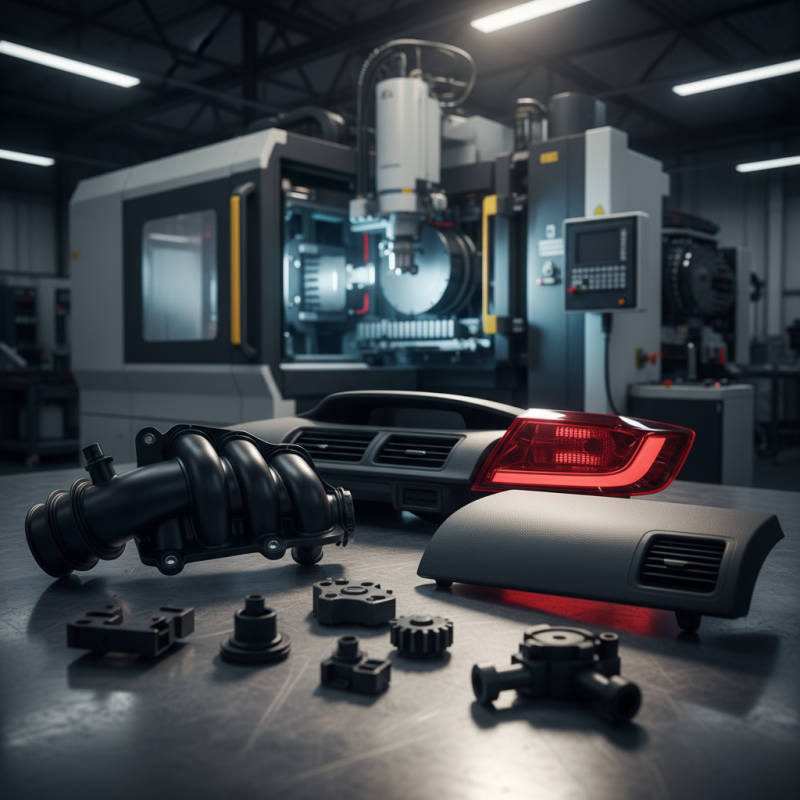
Key Advantages of Injection Molding for Automotive Parts Manufacturing
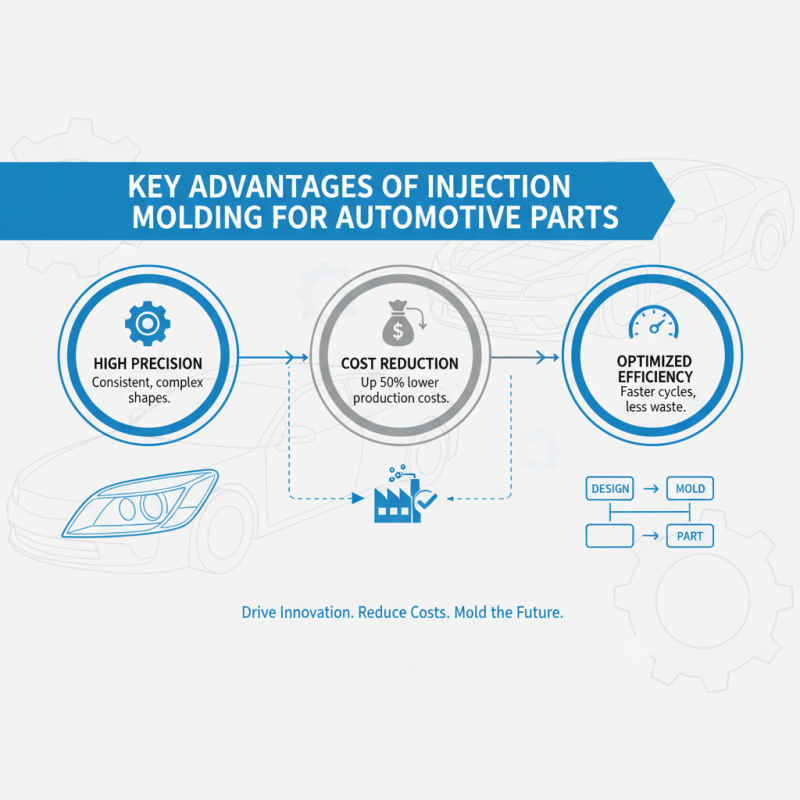
Injection molding is vital in automotive parts manufacturing. It allows for high precision and consistency in producing complex shapes. Reports indicate that injection-molded components can reduce production costs by up to 50%. This efficiency appeals to manufacturers, particularly in a competitive market where margins are tight.
One notable advantage is material versatility. Injection molding can accommodate various plastics and composites. These materials often have superior strength-to-weight ratios. According to industry studies, using lightweight materials in vehicles can enhance fuel efficiency by approximately 15%. Using advanced blends during the molding process can lead to innovative parts that improve vehicle performance.
Sustainability is another critical factor driving the adoption of injection molding. The process generates less waste compared to traditional methods, contributing to eco-friendly initiatives. However, challenges remain in sourcing recycled materials. Finding reliable suppliers who meet quality standards is not always straightforward. As the industry seeks greener solutions, those challenges will need addressing for further advancement.
Cost Efficiency and Reduced Production Time in Automotive Applications
Injection molding plays a pivotal role in the automotive industry, providing significant cost efficiency and reduced production times. According to a report by the Society of Automotive Engineers (SAE), injection molded parts can be produced 30-50% faster compared to traditional manufacturing methods. This efficiency is crucial as automakers strive to optimize production to meet rising consumer demand.
The initial setup cost for injection molding can be high, but the long-term savings are considerable. A study by the American Society of Mechanical Engineers (ASME) indicates that injection molding can minimize material waste by up to 90%. This substantial reduction in waste translates directly into lower material costs. Part durability is also enhanced, which reduces the frequency of replacements and repairs, contributing to overall cost savings.
However, there are challenges. The precision required in tooling can lead to significant upfront investments, potentially discouraging smaller manufacturers. Also, the type of materials used must be carefully considered, as not all plastic resins are equally suited for every automotive application. As the industry evolves, continuous innovation in injection molding processes is essential to address these challenges and maintain its edge in efficiency and cost-effectiveness.
Top 10 Benefits of Injection Molding in the Automotive Industry
| Benefit |
Description |
Impact |
| Cost Efficiency |
Reduces manufacturing costs due to lower material waste and automation. |
Increased profit margins |
| Reduced Production Time |
Accelerates the production process with rapid cycle times. |
Faster time-to-market |
| High Precision |
Ensures tight tolerances and consistent quality in parts. |
Improved product reliability |
| Material Versatility |
Supports a wide range of materials, from plastics to composites. |
Flexible design options |
| Scalability |
Easily adjusts production volume to meet demand. |
Optimal resource allocation |
| Less Waste |
Minimizes excess material through precise molding processes. |
Eco-friendly operations |
| Complex Geometries |
Allows for intricate designs that would be difficult with other methods. |
Enhanced design capabilities |
| Consistent Quality |
Maintains uniform quality across all parts produced. |
Reliable production outcomes |
| Reduced Labor Costs |
Automation lowers the need for manual intervention. |
Lower operational costs |
| Enhanced Safety |
Reduces risks of manual handling injuries. |
Safer work environments |
Design Flexibility: Customization Opportunities in Vehicle Components
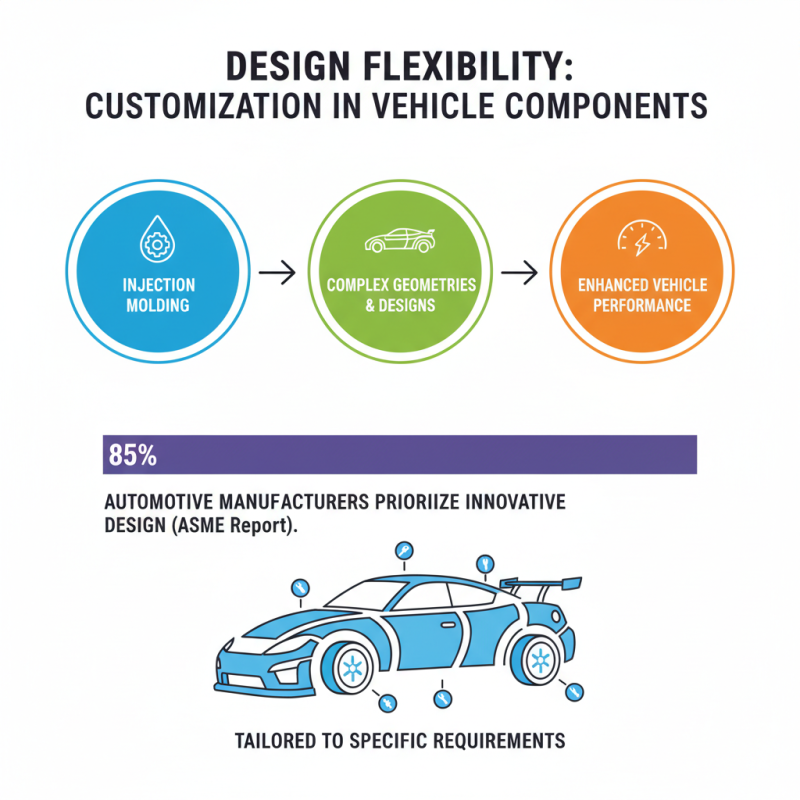
Design flexibility is a critical advantage of injection molding in the automotive industry. This manufacturing method allows for the creation of complex geometries and designs that can enhance vehicle performance. According to a report by the American Society of Mechanical Engineers, 85% of automotive manufacturers now prioritize innovative design features. This shift towards customization is evident in vehicle components, where each part can be tailored to meet specific requirements.
Injection molding enables manufacturers to produce lightweight and durable parts. A recent study indicated that automotive parts made through this process can be up to 30% lighter than traditional components. This weight reduction contributes to improved fuel efficiency. However, the challenge lies in balancing design aesthetics with manufacturability. Some designs may appear innovative but are difficult to produce consistently. This reality prompts engineers to rethink design parameters.
Moreover, the versatility of injection molding allows for the integration of multiple functions into a single part. This could reduce assembly time and costs. Despite these benefits, not every design can be successfully molded. Some intricate details may require extensive testing to ensure functionality. The push for unique designs must account for these practical limitations. Understanding these trade-offs is essential for automotive professionals navigating the landscape of modern manufacturing.
Enhanced Material Properties and Performance Through Injection Molding
Injection molding has transformed the automotive industry by enhancing material properties significantly. This manufacturing technique allows for the production of complex shapes with high precision. As a result, parts can be engineered with improved strength and durability. Materials such as thermoplastics are commonly used, offering benefits like lightweight structures. These attributes contribute to better fuel efficiency in vehicles.
One notable advantage of injection molding is its ability to create parts with enhanced thermal resistance. This property is particularly crucial in automotive applications, where components must withstand extreme temperatures. Additionally, injection molding enables the integration of multiple functionalities in a single part. This reduces assembly time and simplifies manufacturing processes. However, the design phase can be challenging. It requires careful consideration to avoid flaws that may affect performance.
Despite its advantages, injection molding is not without drawbacks. The initial setup can be costly, and prototyping takes time. Errors in design can lead to significant waste and delays. However, the overall efficiency gained through this method often outweighs these challenges. Manufacturers must continuously assess and refine their processes to mitigate potential issues. This ongoing reflection helps improve quality and maintain competitive advantages in the automotive market.
Sustainability and Waste Reduction in the Automotive Injection Molding Process
The automotive industry is increasingly prioritizing sustainability. Injection molding plays a significant role in this transition. This process creates precise components from plastic, which can be recycled or repurposed. The closed-loop system in injection molding minimizes waste generated during production.
Despite its advantages, the injection molding process isn't without flaws. Some materials still end up as waste. This underscores the importance of continuous improvement in recycling technologies. Accurate design and efficient operation are critical to reducing excess. Even small changes can lead to significant reductions in plastic usage.
The shift toward sustainability also involves collaboration among industry players. Knowledge sharing enhances the adoption of eco-friendly practices. Innovations in materials and processes can further reduce the environmental impact. Overall, while injection molding aids sustainability, ongoing efforts are essential for greater waste reduction.