Leave Your Message

China Top Automotive Interior Injection Molding Parts Supplier

China’s automotive sector demands interior parts that feel refined, fit precisely, and survive daily use. Automotive Interior Injection Plastic Part Molding supports these requirements through controlled material selection, mold design, and repeatable production.

John Bozzelli, founder of Scientific Molding, has stated, “The mold is the heart of the injection molding process.” This principle remains practical for dashboard bezels, door trims, console panels, air vents, and switch housings. A reliable China-based supplier should understand more than machine capacity. It should evaluate wall thickness, draft angles, weld lines, sink marks, texture transfer, and assembly tolerances before tooling begins.

The real work starts with the part file.

Experienced mold engineers review resin behavior and cosmetic surfaces together. They may recommend ABS, PC/ABS, PP, TPO, or reinforced materials according to temperature, impact, and appearance requirements. Trial molding should measure warpage, gloss consistency, gate marks, and dimensional stability. Production teams also need documented inspections, material traceability, and controlled process parameters.

No supplier gets every detail right on the first trial. That is worth admitting. A small sink mark near a visible edge can reveal a deeper design weakness. An honest supplier reports the issue, tests the cause, and proposes a measurable correction. This working attitude builds trust more effectively than impressive equipment photographs.

For global automotive customers, the strongest supplier combines tooling experience, engineering communication, quality discipline, and realistic delivery planning. The following outline examines how China’s top automotive interior injection molding parts suppliers create dependable components from concept approval through mass production.
China Top Automotive Interior Injection Molding Parts Supplier

What Is an Automotive Interior Injection Molding Parts Supplier?

China Top Automotive Interior Injection Molding Parts Supplier

An automotive interior injection molding parts supplier designs and produces plastic components inside a vehicle. These parts include instrument-panel bezels, center consoles, door handles, air vents, speaker grilles, and structural trim. The supplier usually manages material selection, mold design, injection molding, surface finishing, inspection, and delivery.

According to Grand View Research, the global automotive plastics market was valued at about USD 35.7 billion in 2022. It is projected to grow at approximately 6.3% annually from 2023 to 2030. This growth reflects rising demand for lightweight, durable, and visually consistent interior components. A capable China-based supplier should provide mold-flow analysis, dimensional reports, color checks, and traceable batch records. Small details matter. A 0.2-millimeter mismatch can create panel gaps or assembly noise.

The supplier also coordinates with vehicle engineers during design changes. It checks wall thickness, draft angles, weld lines, shrinkage, and ejection marks before cutting steel. The U.S. Department of Energy reports that reducing vehicle weight can improve fuel economy, making engineered plastics valuable in interior design. However, lighter parts are not automatically better. They may feel less solid or show more distortion. A reliable supplier tests appearance, heat aging, vibration, and fit under real production conditions. No process is perfect. Clear communication and corrective action remain essential.

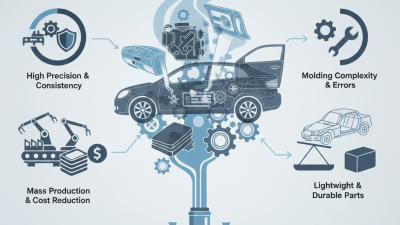
Key Products for Automotive Interior Applications

China Top Automotive Interior Injection Molding Parts Supplier

Key Products for Automotive Interior Applications

Automotive interiors demand clean surfaces, stable dimensions, and reliable daily performance. Our injection molding experience covers dashboards, door panels, center consoles, and air vent bezels. Each part begins with a practical review of geometry, material flow, and assembly pressure. Small details matter. A 0.2-millimeter mismatch can create visible gaps after installation.

We produce glove box components, pillar trims, speaker grilles, cup holders, and decorative interior panels. Engineers select materials according to heat exposure, impact needs, surface texture, and recycling requirements. Tooling includes balanced gates, controlled cooling channels, and replaceable wear inserts. These features support repeatable production and easier maintenance. Texture samples are checked under direct light, not only in digital files.

Inspection may include dimensional testing, color comparison, weld-line review, and assembly trials. A part can pass measurement and still feel wrong in the vehicle. That is why experienced teams test clips, fasteners, and contact surfaces together. No process is perfect. Sink marks, slight warpage, or uneven grain may appear during early trials. We record these issues, adjust the mold, and question our assumptions before volume production. Reliability comes from repeated verification, not confident promises.

China Top Automotive Interior Injection Molding Parts Supplier - Key Products for Automotive Interior Applications

Typical density comparison of thermoplastics commonly used in automotive interior injection molding. Lower-density materials such as PP and TPO support lightweight trim components, while reinforced polyamide is selected for structural or heat-resistant parts. Actual values vary by grade, additives, and reinforcement content.

Materials and Technologies Used in Injection Molding

China Top Automotive Interior Injection Molding Parts Supplier

Automotive interiors demand low weight, stable dimensions, and a refined surface. Polypropylene remains widely used for door panels, consoles, and structural substrates. According to PlasticsEurope’s Plastics – the Fast Facts 2023, automotive applications represented about 8.4% of European plastics demand. That share reflects plastics’ practical value, not fashion.

Material selection changes with heat, impact, and visible quality. ABS offers a clean appearance for bezels and trim parts. PC/ABS blends improve heat resistance and impact performance. TPO supports soft-touch panels and textured surfaces. Recycled PP can reduce virgin resin use, but odor, color variation, and weld-line strength still require careful validation. This is where specifications can look perfect on paper.

Injection molding technology also shapes the final result. Hot-runner systems reduce material waste and support balanced filling across large panels. Gas-assisted molding can lower weight and help control sink marks. Mold-flow analysis identifies air traps, uneven cooling, and warpage before steel is cut. MarketsandMarkets projects the automotive plastics market to grow at roughly 6% annually through the late 2020s, showing continued demand for lightweight solutions. Yet faster production is not always better. We have seen cycle-time targets create uneven gloss. Cooling needs patience. Small tooling adjustments often protect long-term fit, tactile quality, and assembly reliability.

Quality Standards and Manufacturing Capabilities

China Top Automotive Interior Injection Molding Parts Supplier

Quality Standards and Manufacturing Capabilities

A capable automotive interior supplier treats every molded part as a safety-related responsibility. Teams review resin specifications, mold-flow results, and dimensional drawings before production begins. They control moisture, melt temperature, injection pressure, and cooling time. Small changes can create visible sink marks or weak clips. That lesson comes from real production floors, not brochures.

Quality control needs measurable evidence. Engineers use calibrated CMM equipment, gauges, and visual standards for grain, gloss, color, and flash. Incoming materials receive batch verification and traceability labels. During molding, inspectors record key process parameters at defined intervals. First-article approval checks fit, assembly force, and surface appearance. Laboratory testing may include heat aging, odor, abrasion, and impact resistance. Documentation should remain clear and available for audits.

Manufacturing capability also depends on practical coordination. Toolmakers can adjust gates, ejector locations, and cooling channels when trials expose defects. Production teams use automated trimming, robotic handling, or controlled manual inspection where appropriate. Multi-cavity molds improve output, but they can also increase imbalance risks. This deserves honest review. No process is perfect. A strong supplier reports recurring defects, investigates root causes, and updates work instructions instead of hiding problems. Stable lead times require capacity planning, preventive maintenance, spare components, and trained operators. Sample parts should match mass production conditions, not a carefully prepared demonstration run.

How to Choose a Reliable China-Based Supplier

China Top Automotive Interior Injection Molding Parts Supplier

How to Choose a Reliable China-Based Supplier

Choosing an automotive interior injection molding supplier requires more than comparing quotations. Examine the factory’s production experience with visible parts, trim panels, air vents, and functional components. Ask for similar project samples, not only polished photos. A reliable team should explain resin selection, shrinkage control, surface texture, and warpage prevention in clear language.

Check its quality system and technical records. Certifications such as IATF 16949 and ISO 9001 can support credibility, but certificates alone prove little. Request dimensional inspection reports, material certificates, mold maintenance records, and traceability procedures. The supplier should define tolerance limits before tooling begins. It should also provide mold-flow analysis or trial data when the part has thin walls, clips, or complex ribs.

Communication reveals practical reliability. During development, confirm who owns the tooling, how engineering changes are approved, and how corrective actions are documented. Ask for a sample approval plan with measurable milestones. A factory that answers quickly but avoids evidence deserves caution. No supplier is perfect. Even experienced teams may miss a cosmetic defect or underestimate tooling time. What matters is whether they report problems early and fix the cause, rather than hide the symptom. A small pilot order can test packaging, delivery consistency, inspection discipline, and response speed before larger production begins.

China Top Automotive Interior Injection Molding Parts Supplier - How to Choose a Reliable China-Based Supplier

Evaluation Dimension Practical Benchmark or Requirement Evidence to Request Selection Guidance
Automotive Quality System Required
Current IATF 16949 certification is the preferred benchmark for automotive production. ISO 9001 certification supports general quality-system control.
Valid certificates, certification scope, issuing body, expiry date, and the manufacturing site address shown on the certificate. Give priority to suppliers whose certificate covers injection molding, tooling, assembly, and the actual production location.
Environmental Management Recommended
ISO 14001 certification demonstrates a formal environmental management system. Confirm compliance with the customer’s restricted-substance requirements.
ISO 14001 certificate, material declarations, restricted-substance test reports, and waste-management procedures. Use documented environmental controls when interior parts require recycled content, low emissions, or specific substance restrictions.
Automotive Interior Materials Required
Material selection should match the approved specification for polymers such as ABS, PC/ABS, PP, PA, or TPE, including grade, color, additives, and flame-retardant requirements.
Technical data sheets, safety data sheets, certificates of analysis, lot traceability records, and approved material samples. Reject substitutions unless the change is formally reviewed and approved through the customer’s change-control process.
Dimensional Capability Verify
A commonly used production capability target is Cpk ≥ 1.33 for critical characteristics, unless the customer drawing specifies another requirement.
Capability studies, control plans, measurement-system analysis, inspection records, and dimensional reports from production samples. Separate critical-to-function dimensions from general dimensions and evaluate capability on the actual production tool.
Tooling and Mold Engineering Required
The supplier should control mold-flow analysis, cooling design, venting, ejection, steel selection, maintenance, and spare-part planning.
Mold-flow report, mold design review, preventive-maintenance schedule, tool-history records, and agreed ownership terms. Confirm who owns the mold, where it is stored, how maintenance is approved, and how tool life is monitored.
Surface Appearance Required
Visible interior surfaces need an approved cosmetic standard covering gloss, grain, weld lines, sink marks, flow marks, flash, scratches, and color variation.
Golden samples, defect catalogues, lighting conditions, inspection distance, visual limit samples, and appearance inspection records. Define acceptance criteria before tooling release; visual requirements should not rely only on verbal descriptions.
Odor and Volatile Emissions Verify
Interior components may require odor, fogging, volatile-organic-compound, and material-emission testing according to the vehicle program’s specifications.
Recent laboratory reports, test methods, sample conditioning details, and traceability from test sample to production material lot. Compare results with the customer’s specified limits because automotive emission limits vary by program and market.
Production Capacity Required
Capacity should be calculated from machine availability, cycle time, cavity count, planned uptime, scrap rate, and required output—not only installed machine tonnage.
Capacity calculation, machine list, cycle-time study, utilization data, shift pattern, maintenance downtime, and contingency plan. Request a capacity commitment for peak demand and confirm whether critical operations are performed in-house or subcontracted.
Process Control Required
Stable molding requires documented process parameters, first-piece approval, in-process inspection, reaction plans, and traceability of material and production date.
Process flow, PFMEA, control plan, work instructions, parameter logs, inspection records, and nonconformance procedures. Assess whether process data are recorded automatically or manually and whether deviations trigger documented corrective action.
Validation and PPAP Readiness Required
The supplier should be able to support automotive production-part approval activities, including dimensional results, material records, capability studies, and sample submissions.
Redacted sample submission package, inspection reports, process-flow documents, control plans, PFMEA records, and change-notification procedure. Use a pilot build to verify that the supplier can deliver complete and consistent documentation before mass production.
Traceability and Change Control Required
Each production lot should be traceable to material batch, machine, mold, operator or shift, inspection result, and shipment record.
Traceability labels, ERP or manufacturing records, material-batch links, deviation approvals, and engineering-change logs. Do not approve suppliers that make unreported changes to resin grade, tooling location, process parameters, or subcontractors.
Delivery Performance Measure
Evaluate on-time delivery, lead-time consistency, forecast response, minimum order quantity, packaging quality, and export documentation accuracy.
Redacted delivery-performance data, production lead-time commitments, packaging specification, shipping records, and escalation contacts. Use a weighted scorecard and review actual performance during trial orders instead of relying solely on quoted lead time.
Commercial Transparency Required
The quotation should separate tooling, piece price, secondary operations, packaging, inspection, logistics assumptions, taxes, and payment terms.
Itemized quotation, tooling payment schedule, price-validity period, tooling ownership clause, and written assumptions. Compare quotations on total landed cost and lifecycle cost, not only the initial molded-part price.
Communication and Engineering Support Assess
A reliable supplier should provide clear English documentation, defined response times, design-for-manufacturing feedback, and a named project contact.
Meeting records, design-review comments, response-time commitments, escalation chart, and sample project schedule. Evaluate communication during the quotation and tooling stages; poor response discipline usually creates greater risk during production.
Audit and Risk Management Audit
Review production-site capability, subcontractor control, business continuity, equipment maintenance, cybersecurity practices, and corrective-action effectiveness.
On-site audit report, corrective-action records, business-continuity plan, subcontractor list, insurance documents, and facility photographs or video evidence. Approve the supplier only after major audit findings are closed with objective evidence and responsible completion dates.

Note: Capability values, certifications, testing requirements, and acceptance limits should always be confirmed against the applicable customer drawing, vehicle program specification, and contract.