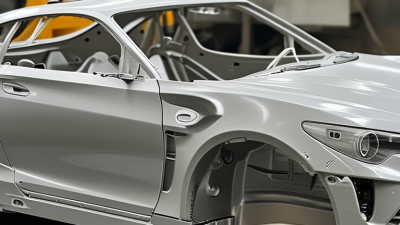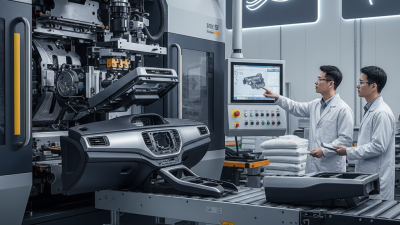
Choosing among the 2026 Top Custom Auto Plastic Injection Molding Suppliers requires more than comparing prices or machine sizes. Automotive buyers need dependable partners for dashboards, interior trims, battery housings, lighting components, and under-hood parts. Custom Automotive Plastic Injection Molding combines material science, mold engineering, process control, and strict production discipline. A supplier may look impressive online, yet its real capability appears in dimensional reports, sample consistency, and response times.
This guide examines manufacturers through practical evidence. It considers engineering experience, tooling design, resin selection, mold-flow analysis, automation, inspection systems, and production capacity. It also reviews how suppliers manage heat, vibration, chemical exposure, and tight assembly tolerances. Small details matter. A warped clip can delay an entire vehicle program. A poorly documented material change can create expensive quality concerns. Reliable suppliers communicate clearly, protect intellectual property, and provide traceable records from raw material to finished component.
No supplier is flawless. Selection involves judgment. Some published claims remain difficult to verify, and regional strengths can vary by project. Therefore, this overview treats certifications as useful evidence, not automatic proof of excellence. Factory audits, trial runs, reference checks, and technical discussions still matter. Look closely. The strongest partners usually show practical knowledge, honest limitations, and stable improvement methods. They can explain why a gate position changed, how a cooling channel reduced cycle time, or when a design needs revision before tooling begins. These qualities help automotive companies build safer, more consistent, and commercially reliable plastic components in 2026.
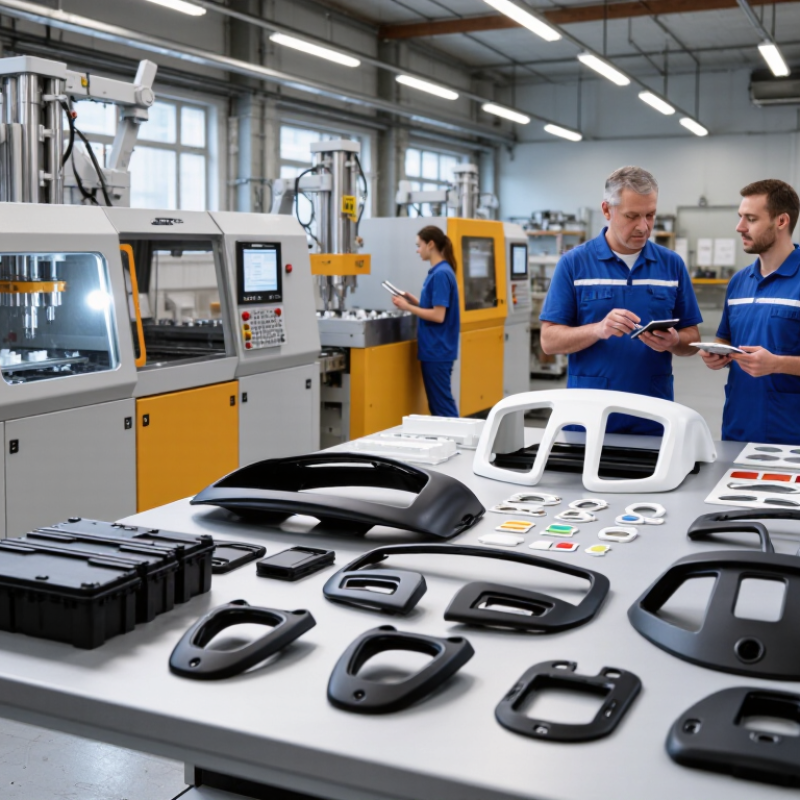
2026 Top Custom Auto Plastic Injection Molding Suppliers
What Defines a Top Custom Auto Plastic Injection Molding Supplier in 2026
A top supplier combines repeatable molding with practical automotive experience. It understands how heat, vibration, and tight spaces affect plastic components. Engineers should review parting lines, draft angles, wall thickness, and warpage before tool construction. Small design changes can prevent expensive production delays.
Traceability matters. Each resin batch should connect to inspection records, machine settings, and operator checks. Strong suppliers use mold-flow analysis, dimensional studies, and controlled sampling during development. They also support APQP, PPAP, capability studies, and documented change management. Clear communication builds trust.
A reliable facility can show evidence, not just promises. Ask for process capability data, calibration records, and realistic production capacity. The supplier should explain how it handles tool wear, color variation, short shots, and flash. These details become visible on the factory floor. Fast feedback helps, too.
No supplier gets every launch perfect. That is worth admitting. A useful partner records failures, investigates root causes, and improves the process. However, technical knowledge alone is not enough. Ethical sourcing, worker safety, environmental controls, and compliance with applicable automotive requirements also define quality. In 2026, the strongest custom molding supplier is transparent, disciplined, and willing to challenge an unsuitable design.
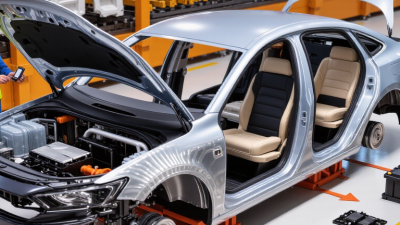
Custom plastic injection molding will remain central to automotive production in 2026.
It creates precise, repeatable parts with controlled surface quality. Common applications include instrument panels, door trims, center consoles, air vents, seat components, cable clips, and sensor housings. Battery covers and charging-port surrounds also need accurate molding.
According to the U.S. Department of Energy, a 10% vehicle weight reduction can improve fuel economy by about 6% to 8%.
That makes lightweight polymers valuable for both electric and combustion vehicles.
Material selection must match heat, vibration, impact, and chemical exposure. Glass-filled polymers can support structural brackets, while flame-retardant grades suit electrical housings.
Automotive injection molding also supports complex ribs, snap-fits, and thin walls, reducing assembly steps.
However, designers sometimes chase lower weight too aggressively.
A thinner wall can increase warpage, sink marks, or premature failure.
The wrong gate location may leave visible weld lines across a clean interior panel. Small details matter.
Tips:
Request resin data, mold-flow analysis, and dimensional capability results before tooling. Check warpage around clips and mounting holes. Review first-shot samples under realistic temperature cycles.
The Plastics Industry Association reports that injection molding remains one of the most widely used plastics processing methods in North America. Still, production volume alone does not guarantee reliability.
Experienced engineers should balance material cost, cycle time, repair access, and end-of-life recovery. Some designs look efficient on paper, but field testing may reveal uncomfortable weaknesses.
Injection molding starts before the press runs.
Engineers convert a vehicle part into a manufacturable design, checking wall thickness, draft angles, ribs, and shrinkage. Mold-flow software then predicts hesitation, weld lines, and trapped air. This step is not decorative. A 2024 U.S. Department of Energy report notes that reducing vehicle weight by 10% can improve fuel economy by roughly 6–8%, increasing demand for precise plastic components.
The mold is cleaned, heated, and clamped under controlled pressure. Plastic pellets are dried, mixed with color or approved additives, and melted inside the barrel. The screw injects the melt through the gate into each cavity. Holding pressure follows. It compensates for shrinkage while the part cools against steel channels. Cooling is often the slowest stage. Too little time causes warpage; too much time reduces productivity.
After cooling, ejector pins release the component, and operators inspect dimensions, surface texture, flash, and short shots. Automated cameras can detect defects, but they do not replace process judgment. The 2024 International Energy Agency Global EV Outlook reported more than 17 million electric cars sold worldwide in 2024, adding pressure for lightweight, repeatable parts. In practice, the sequence is rarely perfect. Moisture, mold temperature, or a tiny venting error can change results. Experienced suppliers record every adjustment, then challenge their own assumptions before approving production.
In 2026, automotive plastic injection molding suppliers should be judged by evidence, not polished presentations. A capable supplier can show controlled samples, complete material records, and repeatable dimensional results. Ask for records from actual production tools. Do not rely on a showroom part. It may hide process variation.
Years alone prove little. Evaluate experience with similar resin families, wall thicknesses, clips, housings, and safety-related tolerances. Review mold-flow analysis, gate decisions, cooling layouts, and documented design changes. An experienced team explains why a sink mark appeared and how it was corrected. That practical memory matters. No supplier is flawless. Honest answers are valuable.
A reliable supplier links each batch to its resin lot, machine settings, operator checks, and inspection results. Look for calibrated gauges, CMM capability, first-article approval, and SPC data. Ask how nonconforming parts are isolated. Also examine mold maintenance, tool steel selection, cycle-time validation, and backup capacity. Environmental controls and worker training support stable output during demand changes. Audits should include production floors, not only offices. Small gaps matter. A missed cavity check, unclear revision, or late measurement can create expensive rework. Suppliers should welcome corrective reviews and provide dated evidence after each action.
This standards-based evaluation model prioritizes automotive quality-system compliance, process capability, tooling expertise, delivery performance, material traceability, and sustainability. The percentages represent recommended assessment weights totaling 100%, not company rankings or market-share data.
2026 Top Custom Auto Plastic Injection Molding Suppliers
2026 Trends Shaping Custom Automotive Plastic Injection Molding
Automotive injection molding is moving toward lighter, smarter, and more circular components. The International Energy Agency reported over 17 million electric cars were sold globally in 2024, exceeding 20% of new-car sales. This shift increases demand for battery covers, sensor housings, cable guides, and thermal-management parts. Suppliers now need tighter tolerances and stronger process validation.
Grand View Research estimates the automotive plastics market will maintain steady growth through 2030. Recycled resins, bio-based materials, and multi-material molding are becoming practical design choices. However, recycled content can vary between batches. That affects shrinkage, surface finish, and dimensional stability. A perfect CAD model may still produce a poor part if drying, venting, or mold temperature is ignored. This is where supplier experience matters. Good teams review resin data, mold-flow results, inspection records, and real production samples.
Tips: Ask suppliers to prove repeatability, not just show prototypes. Request material certificates, tolerance studies, and a documented process window. Check whether the supplier can manage inserts, overmolding, and automated inspection. Also discuss end-of-life separation early. It may be overlooked. Yet a component designed for easier recycling can reduce future redesign work and compliance pressure. The best 2026 partners will combine engineering judgment, transparent data, and controlled experimentation.
| Trend or Capability | Relevant Materials | Typical Automotive Applications | Key Measurable Requirements | Supplier Capability Expected in 2026 | Primary Validation References |
|---|---|---|---|---|---|
| Lightweighting through material substitution | Glass-fiber-reinforced polypropylene, polyamide, PBT, PC/ABS, and long-glass-fiber thermoplastics | Instrument-panel carriers, front-end modules, seat structures, battery-support components, and underbody parts | Lower part mass while maintaining stiffness, impact resistance, dimensional stability, and temperature performance | Material comparison, fiber-orientation analysis, structural simulation, controlled wall thickness, and rib optimization | ISO 527 tensile properties, ISO 178 flexural properties, ISO 179 or ISO 180 impact testing, and OEM-specific validation plans |
| Growth of components for electrified vehicles | Flame-retardant polyamide, PBT, PC, PC/ABS, thermoplastic elastomers, and electrically insulating compounds | High-voltage connectors, charging interfaces, busbar carriers, sensor housings, battery-module components, and cable-management parts | Electrical insulation, flame resistance, dimensional accuracy, chemical resistance, and thermal aging performance | Clean molding environments, traceability of resin lots, moisture control, insulation testing, and capability studies for critical dimensions | UL 94 flammability classification, IEC 60695 methods, dielectric testing, thermal-aging procedures, and applicable automotive electrical standards |
| Higher use of recycled and circular-content polymers | Post-industrial recycled polypropylene, post-consumer recycled polymers, recycled polyamide, and chemically recycled feedstocks | Interior trim, luggage-compartment components, air-management ducts, protective covers, and non-structural housings | Verified recycled-content percentage, stable melt flow, controlled contamination, acceptable odor, appearance, and mechanical consistency | Incoming-material verification, batch traceability, drying controls, color management, and documented performance comparisons with virgin resin | ISO 1133 melt-mass flow rate, ISO 1183 density, ISO 4892 weathering methods, odor testing, and customer-specific recycled-content requirements |
| Conformal cooling and simulation-driven mold design | Engineering thermoplastics requiring tight dimensional control, including reinforced PA, PBT, PC/ABS, and PPS | Thin-wall housings, precision brackets, optical bezels, thermal-management components, and complex interior structures | Improved cooling uniformity, reduced warpage, shorter cycle potential, and tighter dimensional capability | Mold-flow analysis, cooling-channel optimization, additive-manufactured inserts where appropriate, and measured mold-temperature mapping | Process capability indices, dimensional inspection, warpage measurement, mold-temperature studies, and first-article inspection reports |
| Thin-wall and high-speed injection molding | High-flow polypropylene, PC/ABS, polycarbonate, PBT, and specialized reinforced compounds | Decorative interior panels, bezels, switch carriers, electronic housings, and lightweight air ducts | Consistent fill, controlled sink marks, weld-line strength, acceptable surface finish, and stable dimensional results | High-response injection units, optimized gating, venting design, scientific molding, and in-process pressure and temperature monitoring | Short-shot studies, cavity-pressure monitoring, visual inspection standards, tensile testing, and dimensional capability analysis |
| Integration of multiple functions into one molded part | PP, PA, PBT, PC/ABS, TPE overmolds, and two-shot-compatible thermoplastics | Sealed connectors, soft-touch controls, integrated brackets, ducts with clips, and assemblies combining rigid and flexible sections | Reduced part count, fewer assembly operations, reliable bonding, sealing performance, and repeatable insert positioning | Insert molding, two-shot molding, overmolding, automated loading, poka-yoke tooling, and assembly-compatible inspection systems | Peel or adhesion testing, leak testing, pull-out testing, torque testing, dimensional inspection, and environmental cycling |
| Improved appearance and Class-A surface control | PC/ABS, ABS, PMMA, polycarbonate, high-gloss polypropylene, and decorative TPE grades | Instrument panels, console surfaces, door-trim components, bezels, air-vent assemblies, and visible electronic housings | Low-flow-mark visibility, controlled gloss, uniform grain replication, low warpage, and consistent color across production batches | Texture-specific mold finishing, controlled cavity temperatures, color measurement, clean-room practices for visible parts, and approved master samples | Color difference measurement, gloss measurement, surface-defect standards, dimensional inspection, and environmental appearance testing |
| Automation, inline inspection, and manufacturing traceability | All commonly molded automotive thermoplastics, especially safety- and electronics-related grades | Connectors, clips, sensor housings, safety-system components, fluid-management parts, and high-volume interior products | Reduced handling variation, complete batch history, stable process capability, and rapid detection of defects | Robotic part removal, vision inspection, cavity-level identification, barcode or data-matrix traceability, and automated process-data collection | IATF 16949 quality-system practices, control plans, measurement-system analysis, statistical process control, and nonconformance records |
| Multi-material sealing and soft-touch overmolding | Thermoplastic elastomers, thermoplastic vulcanizates, silicone-compatible systems, PP, PA, and PC/ABS | Weather seals, vibration isolators, grips, switch surrounds, fluid seals, and noise-reduction components | Hardness consistency, compression set, adhesion, tear resistance, sealing force, and resistance to temperature and automotive fluids | Material-pair compatibility studies, controlled substrate preparation, precise shot sequencing, and automated leak or force testing | ISO 868 hardness, ISO 815 compression set, ISO 37 tensile testing for elastomers, leak testing, and fluid-compatibility testing |
| Higher reliability under heat, chemicals, and vibration | Heat-stabilized PA, PBT, PPS, PEEK for specialized applications, PC/ABS, and chemical-resistant polypropylene | Engine-compartment parts, thermal-management modules, fluid connectors, sensor housings, and components near electric-drive systems | Resistance to thermal cycling, coolant or oil exposure, vibration, humidity, UV exposure, and long-term dimensional change | Material drying discipline, robust process windows, accelerated aging programs, fixture-based testing, and failure-analysis capability | ISO 188 heat-aging methods, ISO 4892 weathering methods, vibration testing, thermal cycling, chemical exposure, and customer-specific durability tests |