7 Tips for Buying Plastic Injection Molding Golf Cart Parts?
Buying Plastic Injection Molding Golf Cart Parts can look simple until a small fit problem stops an entire cart. A cracked dashboard panel, loose cup holder, or warped battery cover may create noise, vibration, and unnecessary repair work. The cheapest part is not always the best value.
John Bozzelli, a respected injection-molding educator, has said, “Molding is a science, but it is also an art.” His observation matters here. Good golf cart components depend on resin selection, mold accuracy, cooling control, and careful quality inspection. Buyers should examine material strength, weather resistance, dimensional consistency, surface finish, and compatibility with their cart model. Ask for samples when possible. Hold them beside the original part. Check the mounting holes, clips, edges, and visible color.
This guide presents seven practical tips for making a more reliable purchase. It considers supplier experience, production standards, replacement accuracy, and long-term outdoor performance. A part that looks perfect online may fail under sunlight, rain, vibration, or repeated loading. That risk is easy to underestimate.
There is also room for honest doubt. Product descriptions can sound impressive while hiding weak testing details. Some buyers focus too heavily on price. I have seen how that decision can produce repeated replacements and wasted labor. Careful questions usually reveal more than polished advertising. The right Plastic Injection Molding Golf Cart Parts should fit correctly, perform consistently, and support safer, more predictable maintenance.
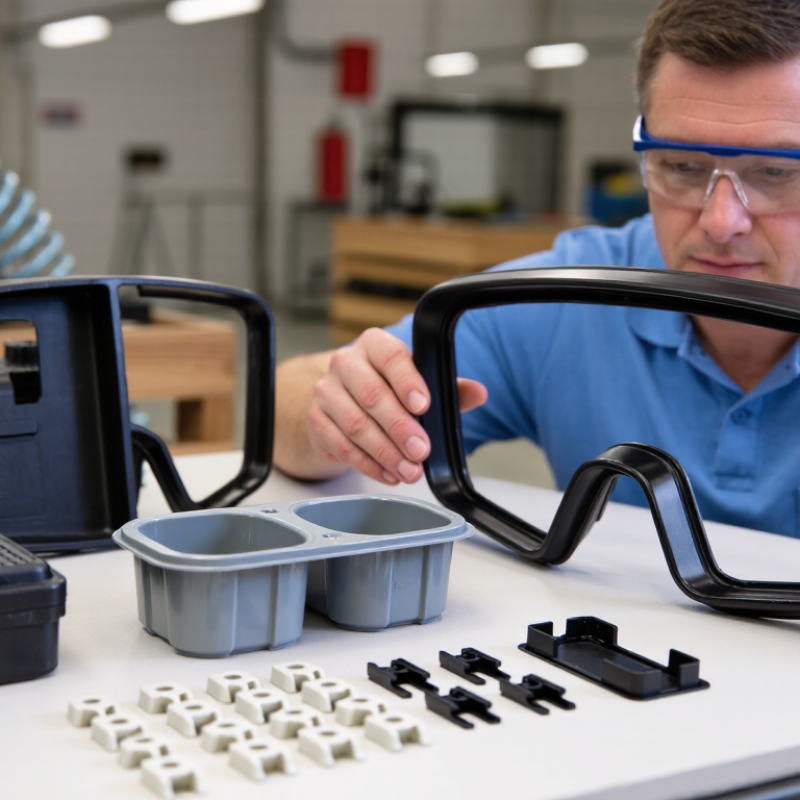
Define Your Golf Cart’s Part Requirements and Compatibility
Before buying plastic injection molding golf cart parts, define the exact application.
Record the cart’s model year, drive system, voltage, body configuration, and part location. Measure mounting holes, panel thickness, connector positions, and clearance around moving components. Small differences matter. A replacement cover may look correct but fail because its clips sit three millimeters apart.
Material compatibility deserves equal attention.
Polypropylene can reduce weight, while ABS may provide better surface stiffness and impact resistance. Confirm UV exposure, temperature range, chemical contact, and expected load before ordering.
The Plastics Industry Association’s 2023 Size and Impact report valued the U.S. plastics industry at approximately $548 billion in shipments during 2022, showing the scale of available processing expertise. However, market size does not guarantee a suitable part. Ask for dimensional drawings, tolerance information, resin details, and inspection records.
Check electrical compatibility carefully.
Match voltage ratings, terminal orientation, wire gauge, and sealing requirements. A connector can fit physically and still perform poorly. Review the supplier’s sample against the original part before purchasing volume quantities. I would also request a first-article inspection, even for a simple trim panel. It may feel excessive. It can prevent costly rework. ASTM material guidance and ISO 20457 provide useful references for molded-part tolerances, though neither replaces a cart-specific fit test. Some measurements may remain uncertain, especially on older carts. Document those gaps instead of assuming interchangeability.
Evaluate Plastic Quality, Material Performance, and Weather Resistance
When buying plastic injection molding golf cart parts, inspect the resin quality before admiring the finish. A glossy surface can hide weak material. Ask whether the part uses virgin resin, approved recycled content, or an undisclosed blend. Consistent color, smooth edges, and clean mounting holes indicate controlled molding. However, appearance alone proves little.
Material performance matters during daily driving. Outdoor cart parts face vibration, repeated impacts, and temperature changes. Look for plastics with suitable impact strength, stiffness, and fatigue resistance. ABS may suit rigid panels, while reinforced polymers can support stressed brackets. Check the supplier’s technical data for tensile strength, heat resistance, and dimensional stability. I once saw a perfect-looking cover crack around its screw holes. The design had too much stress.
Weather resistance deserves careful attention. Sunlight can fade and embrittle unprotected plastic. Rain, humidity, mud, and cleaning chemicals create additional wear. Select parts with verified UV stabilizers and moisture resistance. Ask for accelerated weathering results, not vague claims about outdoor durability. Thermal cycling data is useful when carts move from cold storage into strong afternoon heat. Small details matter.
Review lot traceability, inspection records, and fit-testing procedures. A reliable supplier should explain molding tolerances and replacement policies clearly. Check the part after installation for gaps, warping, or forced alignment. If a panel needs excessive pressure, reconsider it. The cheapest material may become expensive after one harsh season. Yet even premium plastic can fail when mounting design or maintenance is poor.
Compare Manufacturing Precision, Fit, and Surface Finish
7 Tips for Buying Plastic Injection Molding Golf Cart Parts
Tip 1: Compare manufacturing precision, not only the quoted price. Check critical dimensions around mounting holes, clips, and panel edges. A difference of one millimeter can create rattling or difficult assembly. Tip 2: Request tolerance data for each important feature. General claims about “high precision” are not enough. A simple inspection report is more reliable.
Tip 3: Test the part against your existing golf cart structure. Confirm hole alignment, edge clearance, and fastening pressure. Tip 4: Inspect a production sample before approving a larger order. Look for flash, sink marks, warping, and uneven wall thickness. These defects may appear minor, but sunlight can make them more obvious. Tip 5: Compare the surface finish under natural light. Smooth, textured, or matte surfaces should match the surrounding panels. A glossy patch can make a replacement part look poorly fitted.
Tip 6: Ask how the mold controls shrinkage and cooling. Uneven cooling often causes curved edges or twisted mounting points. Tip 7: Review material performance for heat, moisture, and outdoor exposure. Fit can change after repeated temperature cycles. One honest concern remains: visual inspection alone can miss internal stress. A dimensional check and trial installation provide stronger evidence. Keep room for correction, because the first sample is not always the best sample.
7 Tips for Buying Plastic Injection Molding Golf Cart Parts
Compare Manufacturing Precision, Fit, and Surface Finish
The chart compares representative industry-typical capabilities for thermoplastic golf cart parts. Lower values indicate tighter dimensional variation, more consistent fit, or a smoother surface. Actual results depend on resin shrinkage, part size, mold design, tooling condition, and process control.
Verify Supplier Standards, Customization Options, and Quality Control
When buying plastic injection molding golf cart parts, supplier standards deserve more than a polished catalog. Ask for documented quality procedures, trained operators, and traceable material records. Can they show recent inspection reports? Small details matter. Review the mold design, resin grade, color stability, and expected service temperature. A supplier with controlled drying, clean storage, and calibrated machines is easier to trust. Request samples from normal production, not specially selected pieces. Check mounting holes, edge finish, wall thickness, and fit against the original assembly. A perfect sample proves little if batch consistency is weak.
Customization should solve a measured problem. Share drawings, critical dimensions, load conditions, and the cart’s working environment. Confirm whether the supplier can adjust ribs, clips, textures, or UV protection without weakening the part. Ask who owns revised tooling data and how changes receive approval. It is tempting to accept a quick prototype. I have learned that speed can hide poor draft angles or uneven shrinkage. Include a first-article inspection before full production. Test several parts, not just one. That exposes variation.
Quality control must continue after approval. Request checks for dimensions, appearance, impact resistance, and assembly fit at agreed intervals. Clarify sampling plans, defect definitions, packaging methods, and replacement procedures. Photos help, but physical records are stronger. Keep a written change log. An honest supplier will explain failures and corrective actions without vague promises. Still, do not outsource every decision. Your technician should inspect incoming parts under real workshop conditions. Dust, vibration, and repeated impacts may reveal weaknesses that laboratory checks miss. This step is often skipped. It should not be.
Review Pricing, Warranty Coverage, Delivery, and After-Sales Support
7 Tips for Buying Plastic Injection Molding Golf Cart Parts
Tip 1: Compare the full price, not only the unit quote. Ask whether tooling, color matching, packaging, and shipping are included. A low price can hide weak plastic, uneven edges, or expensive replacement costs. Request a sample before approving a large order. I learned this after overlooking small finishing defects that became obvious during installation.
Tip 2: Review the warranty in writing. Confirm its length, covered defects, replacement process, and exclusions. Ask whether cracking, warping, fading, and incorrect dimensions are covered. Warranty wording matters. A vague promise may offer little practical protection. Also check whether installation mistakes cancel coverage.
Tip 3: Examine delivery details carefully. Request a production schedule with inspection and shipping dates. Confirm how delays are reported and who manages damaged cartons. For urgent repairs, keep a small spare inventory. I once planned around an optimistic delivery estimate, and the golf cart remained unused for several days.
Tip 4: Test after-sales support before ordering. Send technical questions and observe the response time. Reliable suppliers provide installation guidance, measurement help, and replacement procedures. Ask for drawings or material information when fitment is complicated. Good support should remain available after payment.
Tip 5: Check quality consistency between samples and production parts. Tip 6: Confirm color and texture under outdoor lighting. Tip 7: Keep invoices, specifications, photos, and inspection records. These details make claims clearer and prevent avoidable arguments. Be realistic, too. No supplier can remove every risk from custom plastic production.